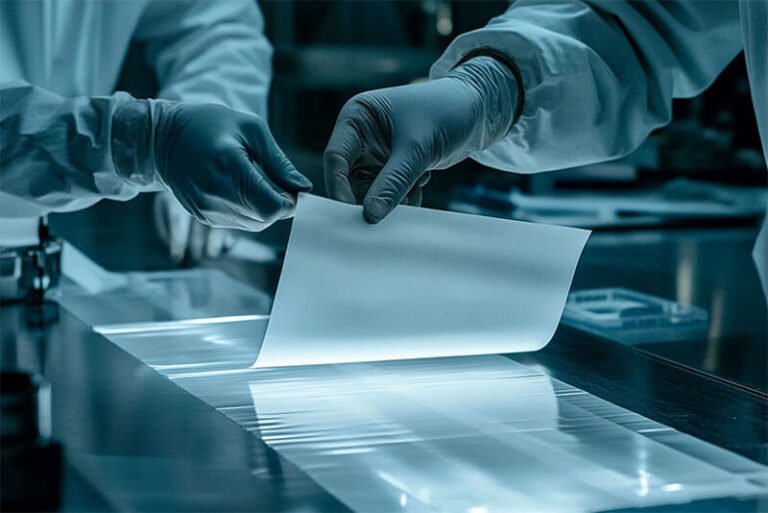
Fluorosilicone Release Liners for Electronics & Precision Converting
Our fluorosilicone release liners are engineered for high-precision converting and adhesive assembly across the electronics industry and beyond.
They provide ultra-clean release, dimensional stability, and reliable bonding for sensors, dry electrodes, optical films, and adhesive laminates used in smartphones, tablets, wearables, and display modules.
Silicone adhesive converting is not exclusive to electronics.
Related converting applications can be found in
Healthcare & Medical Devices and Automotive & EV Components.
Key Benefits
Consistent & Stable Release Force
Fluorosilicone liners deliver ultra-low and predictable release force—critical for high-tack silicone adhesives in kiss-cutting or laser die-cutting. Minimizes adhesive lift, misalignment, and process interruptions.
No Adhesive Transfer or Surface Contamination
Our liners prevent silicone pickup or residue on blades, rollers, or adhesive surfaces. Reduces equipment downtime, ensures clean separation, and maintains bonding reliability in multilayer builds.
Flat & Curl-Resistant for Accurate Converting
PET and polyimide liners remain flat under pressure and heat, supporting tight-tolerance lamination and converting. No curling, wrinkling, or shrinkage—ideal for microelectronic layers and precision assembly.
Easy Integration into Manual or Automated Production
Engineered for controlled peel performance, enabling smooth liner removal in both hand assembly and robotic processes. Supports high-speed roll-to-roll converting and multilayer lamination.
Applications

Precision Die-Cut Adhesive Components
Dry Electrode & Sensor Pad Laminates
Optical Bonding & Display Layer Assembly
Silicone-Adhesive Laminates
Customized Fluorosilicone Release Liners for Electronics & Precision Converting
Engineered for high-precision converting of silicone-based adhesives, our fluorosilicone liners deliver consistent release performance under thermal stress, lamination pressure, and fine die-cutting—supporting electronics, medical, and industrial manufacturing.
Fluorosilicone Release Liner Models for Electronics & Precision Converting
Representative configurations tailored for dry electrode pads, multilayer sensors, OCA optical stacks, and laminated film devices.
Model | Release Force | Substrate | Key Features |
|---|---|---|---|
Ultra Low (<3 g/in) | PET 50µm | Designed for kiss-cutting high-tack silicone OCA films in display or optical bonding. Ensures residue-free separation in cleanroom converting. | |
Low (3~10 g/in) | PET 50 μm | Optimized for dry electrode laminates and multilayer sensor pads. Maintains shape under high-speed slitting or kiss-cutting. | |
Moderate (10–30 g/in) | PET 50µm | General-purpose fluorosilicone liner for stacked PSA laminates and functional barrier films. Performs well under thermal and pressure stress. | |
Custom Options | Heavy (>30 g/in) | PET or Polyimide | Specialty models for heat-resistant converting, printable surfaces, or ultra-thin builds. |

Need a clean-release liner for your sensor pad, display film, or die-cut part?
Automotive & EV Components-Specific FAQ
Yes. All standard fluorosilicone-coated liners are free from SVHC-listed substances and meet the requirements of EU REACH and RoHS directives, making them suitable for global electronics and wearable applications.
Not if properly engineered. Our fluorosilicone liners are designed to minimize silicone migration and preserve bonding strength, even in multilayer stacks and precision die-cut formats used in sensors, dry electrodes, and optical films.
Our liners are manufactured in ISO-controlled environments with anti-static and contamination-controlled handling to support cleanroom applications such as optical films and diagnostic devices.
PET liners in 50–75μm thickness are typically recommended for kiss-cutting and precision die-cutting of thin-film electronics or display layers. They offer sufficient stiffness without curling or deformation.
Yes. PET and polyimide-based liners provide thermal resistance and dimensional stability under lamination or laser converting, ensuring precision alignment without shrinkage.
Yes. Our liners are optimized for both platinum- and peroxide-cured silicone PSAs, enabling stable release and consistent peel strength in demanding electronic and wearable assemblies.
Related Insights
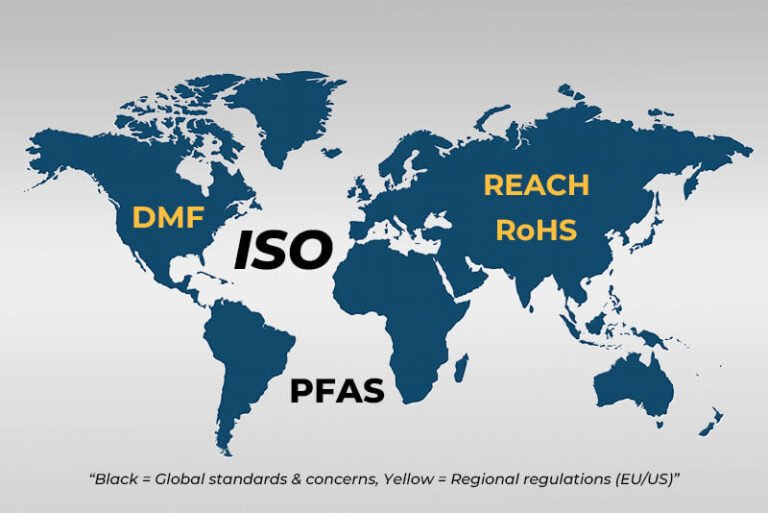
Regulatory Compliance for Fluorosilicone Release Liners – Global Standards and Requirements
Test_03